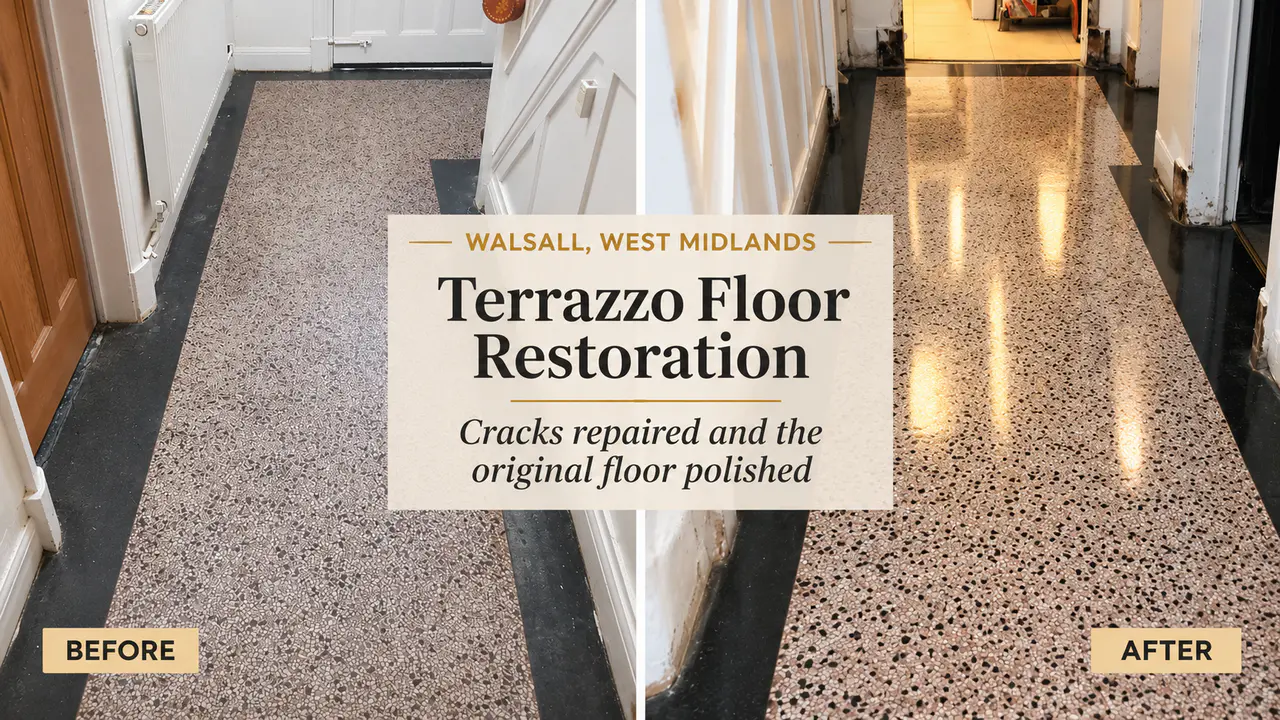
Cracks Beneath Carpet Needed Terrazzo Restoration In Walsall
Last Updated on November 23, 2026 by David
A terrazzo floor beneath the hallway carpet gave our Walsall client an opportunity to complement their new décor with a high-polished finish. We achieved a deep, lustrous shine through repairs, diamond grinding, progressive honing and polishing—but keeping that finish looking its best would also depend on regular care.
A promising floor, with damage around the doorways
The terrazzo initially looked to be in good condition. Closer attention was needed around the doorways, however, where there were cracks and areas of floor movement. There were also holes left by carpet-gripper nails.
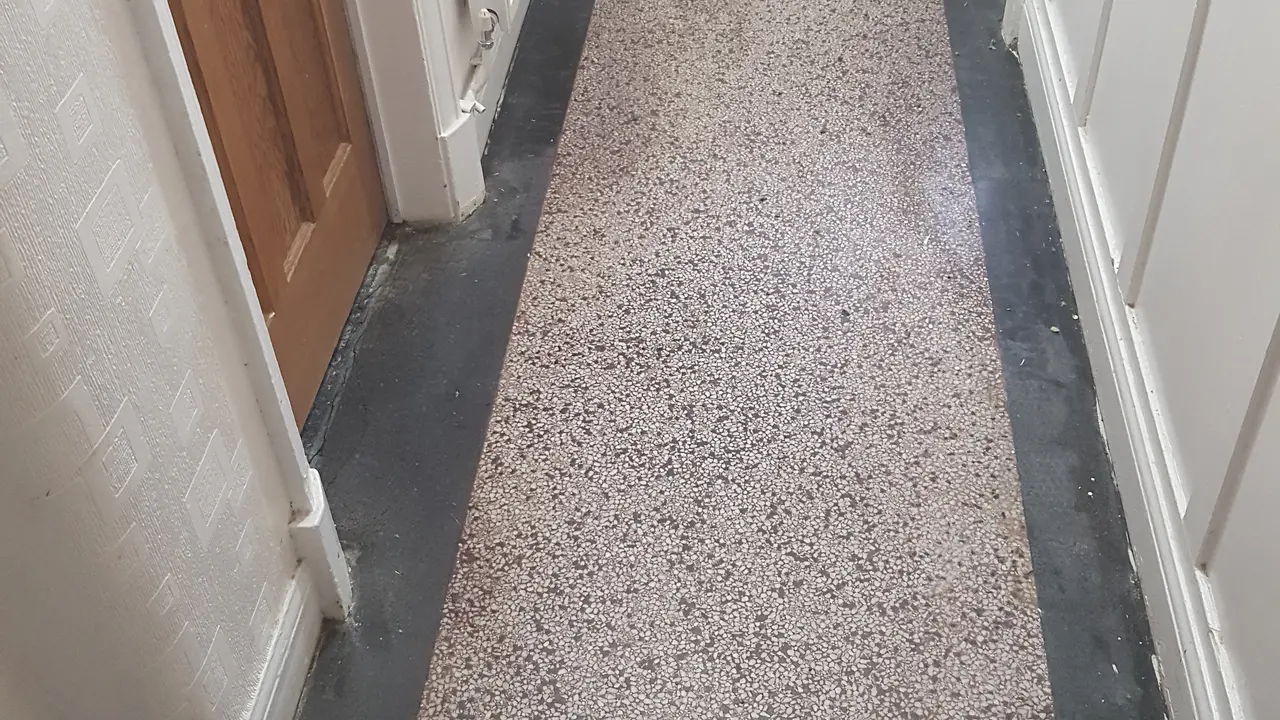
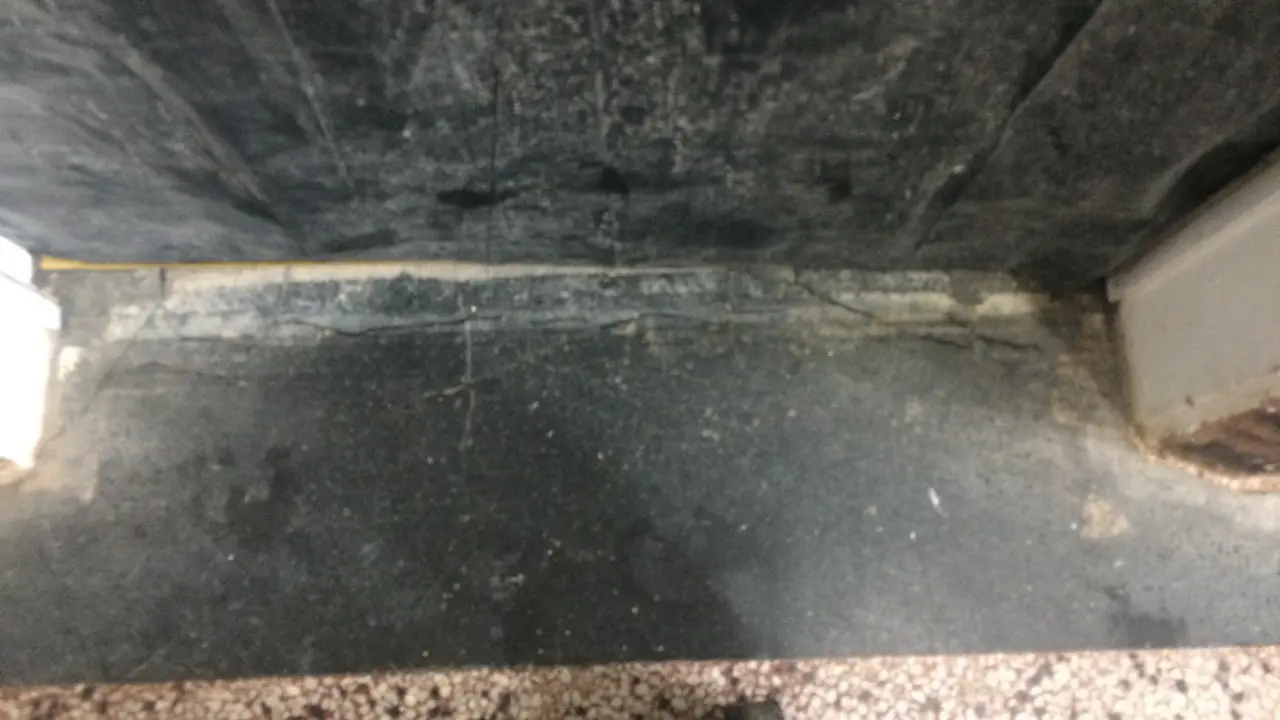
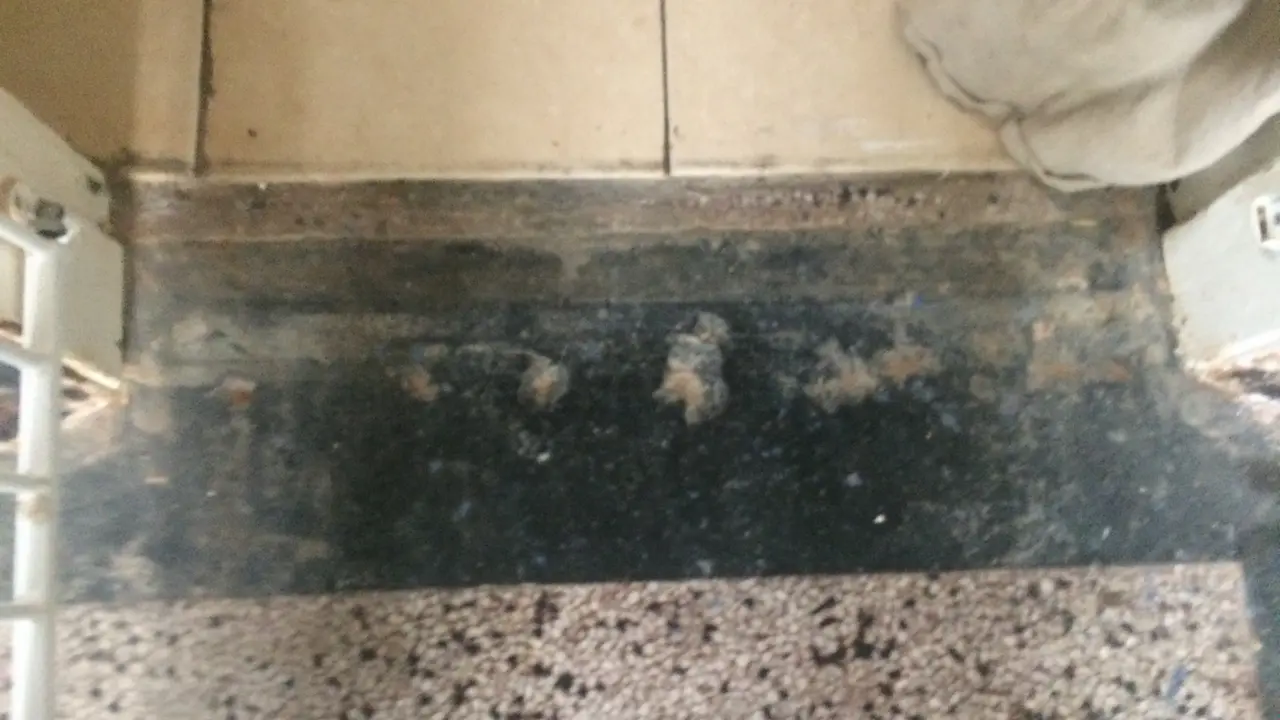
The client wanted a high polish rather than a subdued finish. We explained that this was achievable, but that a super-high shine would not last well without a proper maintenance routine. The large entrance porch offered a practical place to remove outdoor footwear before stepping onto the restored hallway.
There was also an important distinction between repairing the visible cracks and resolving movement: filling a crack does not, by itself, establish that any underlying movement has stopped. The finished appearance should not be taken as a guarantee against future cracking.
First, repairing the cracks and nail holes
We began by cleaning out the cracks and holes with diamond burrs. Preparing the damaged areas before filling gave the repair material clean surfaces to bond to, rather than leaving loose material within the defects.
We filled the prepared areas with red and black two-part fillers, which set very hard in a couple of hours.
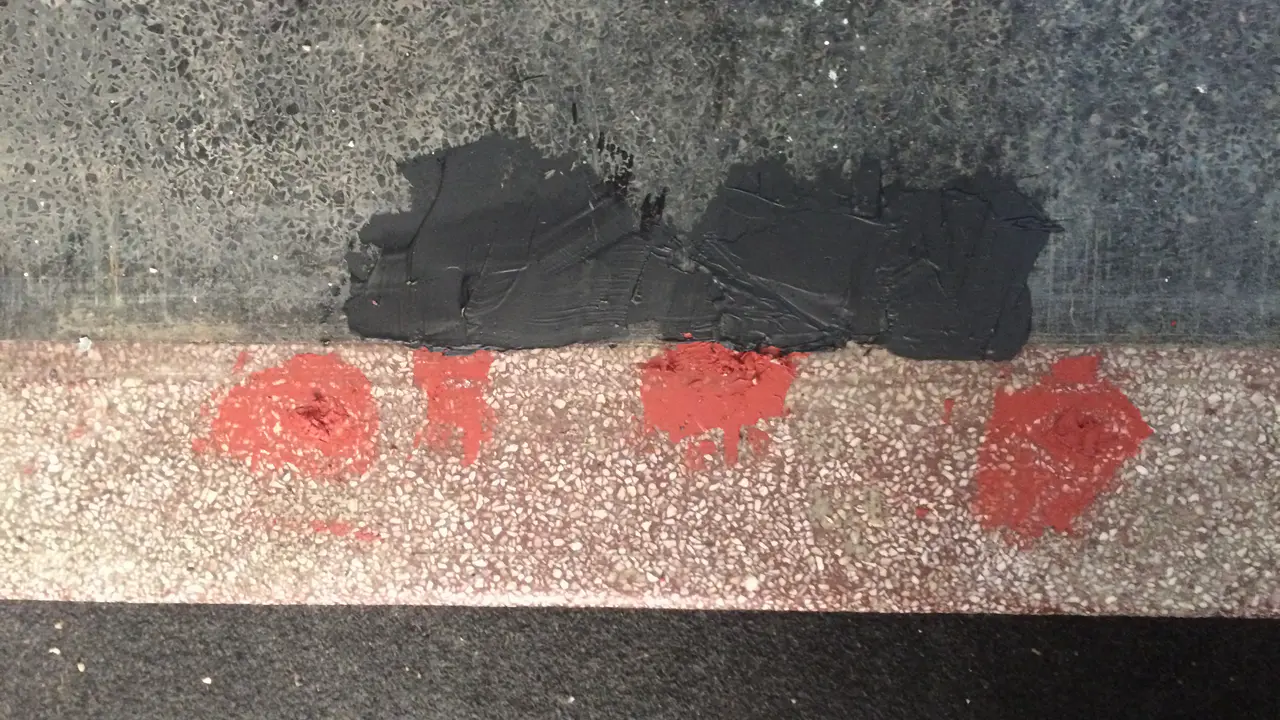
Once the filler had hardened, we used hand grinding and polishing tools to remove the excess and polish the repaired areas to a high shine. This local work addressed the individual defects before the main floor-grinding stage.
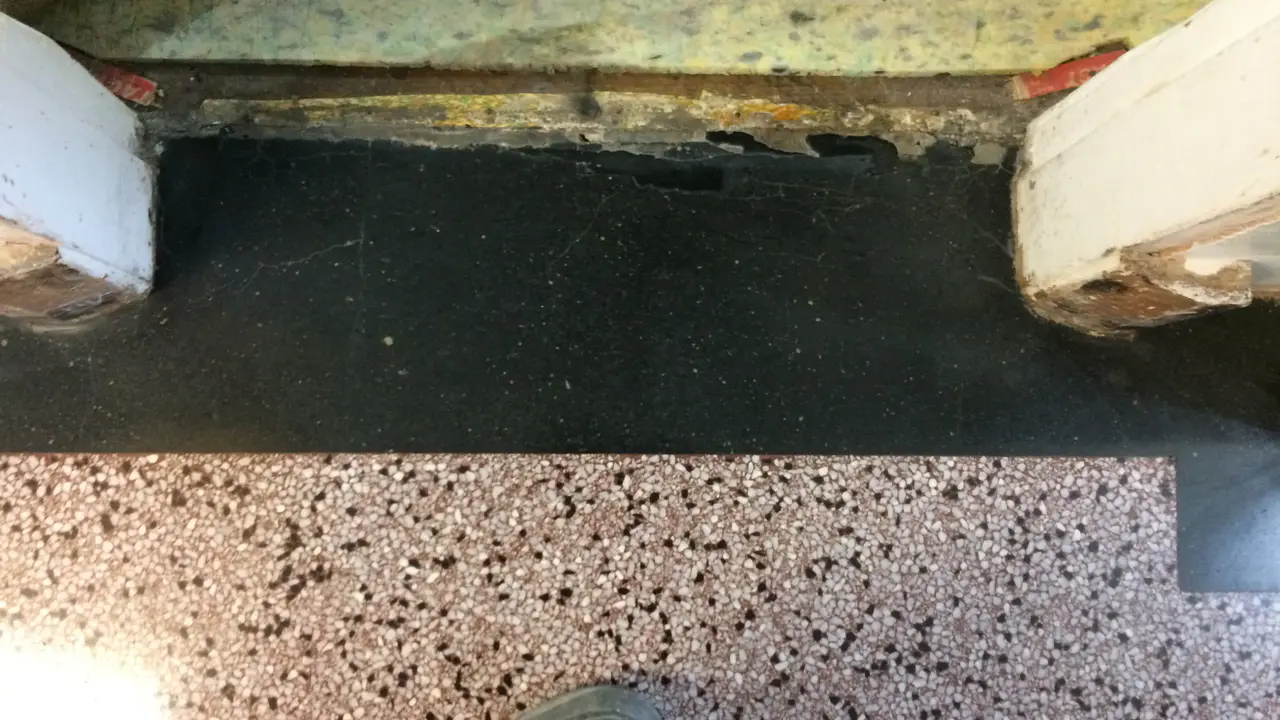
Grinding and honing: creating the surface for a high polish
We then ground the floor with a heavy-duty planetary grinding machine fitted with 30-grit and 50-grit metal-sintered diamond tooling. This was an aggressive resurfacing stage that removed the top of the terrazzo, rather than simply cleaning it or applying a gloss coating.
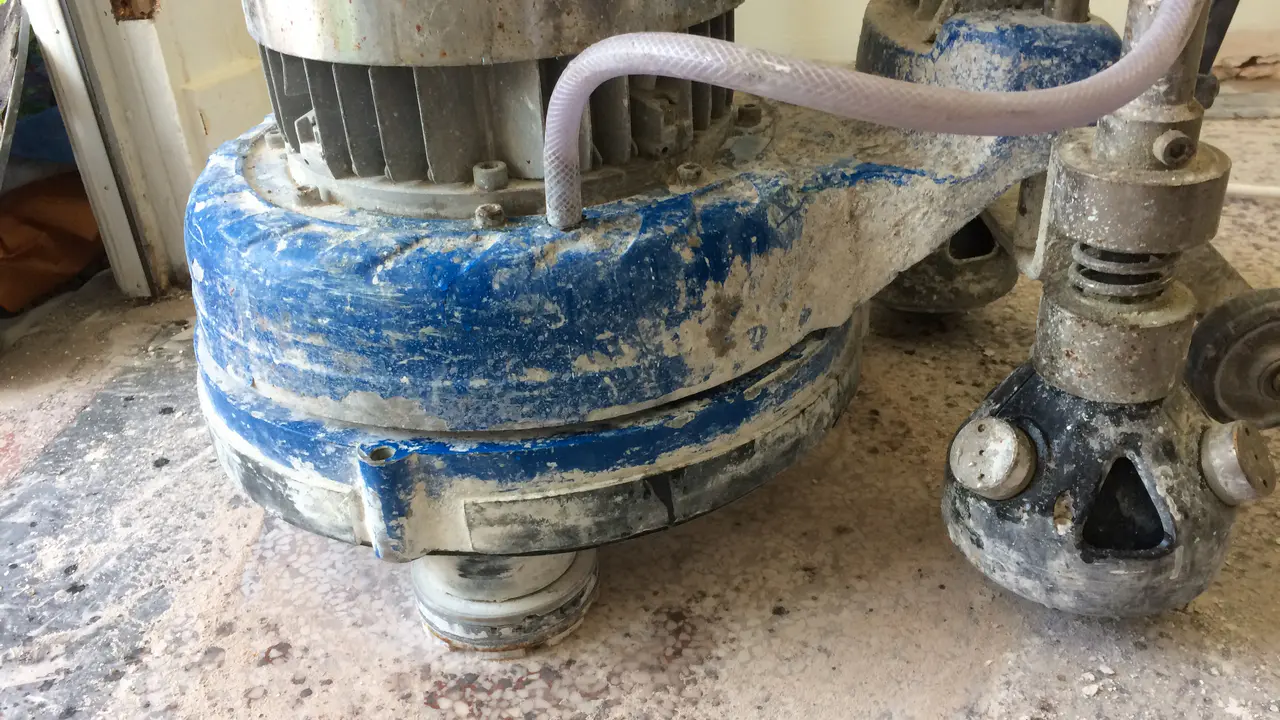
The grinding occupied the remainder of the first day and produced wet slurry as the surface was cut back. Grinding permanently removes material, so this was a project-specific treatment—not a routine remedy for every dull terrazzo floor.
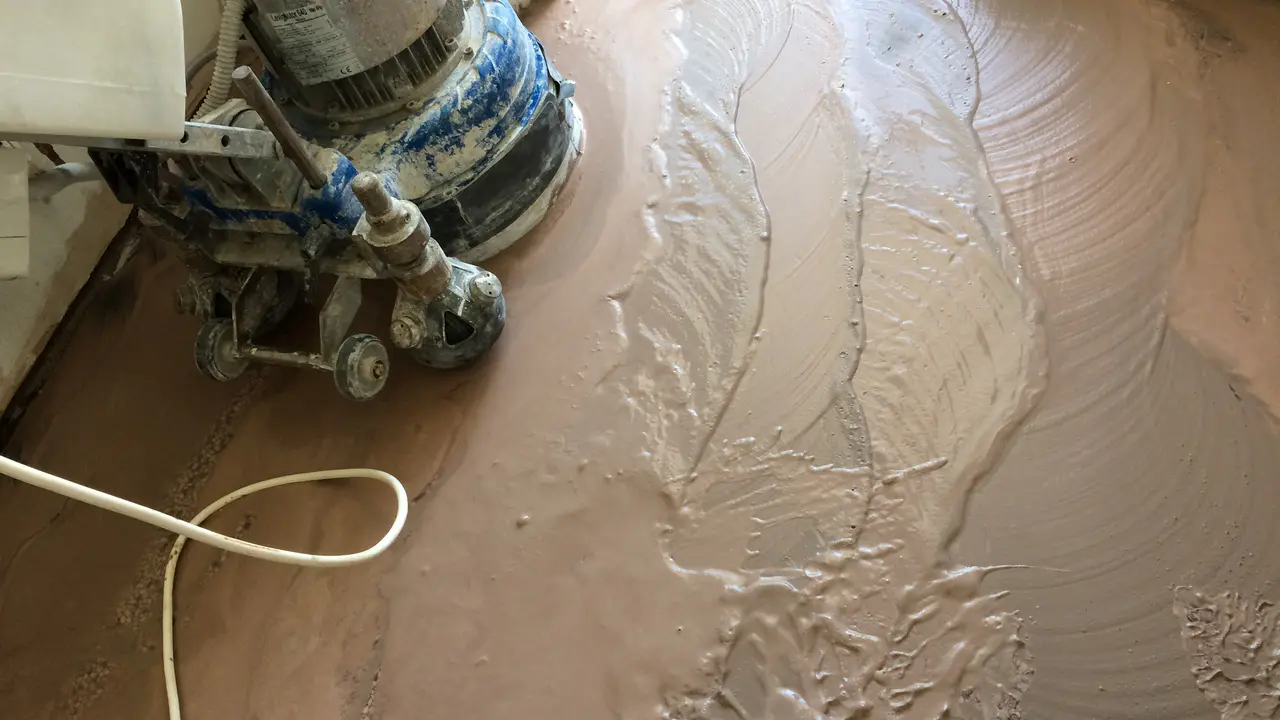
On the second day, we honed the floor progressively, starting with 100-grit diamond tooling and finishing at 3,000 grit. The finer stages refined the scratches left by the coarser tooling and prepared the surface for its final polish. We then left the floor overnight to dry before polishing.
Finishing the entrance step and polishing the hallway
The entrance-step riser needed hand equipment rather than the main floor machine. We ground and polished it with hand polishing equipment, leaving a rich red finish.
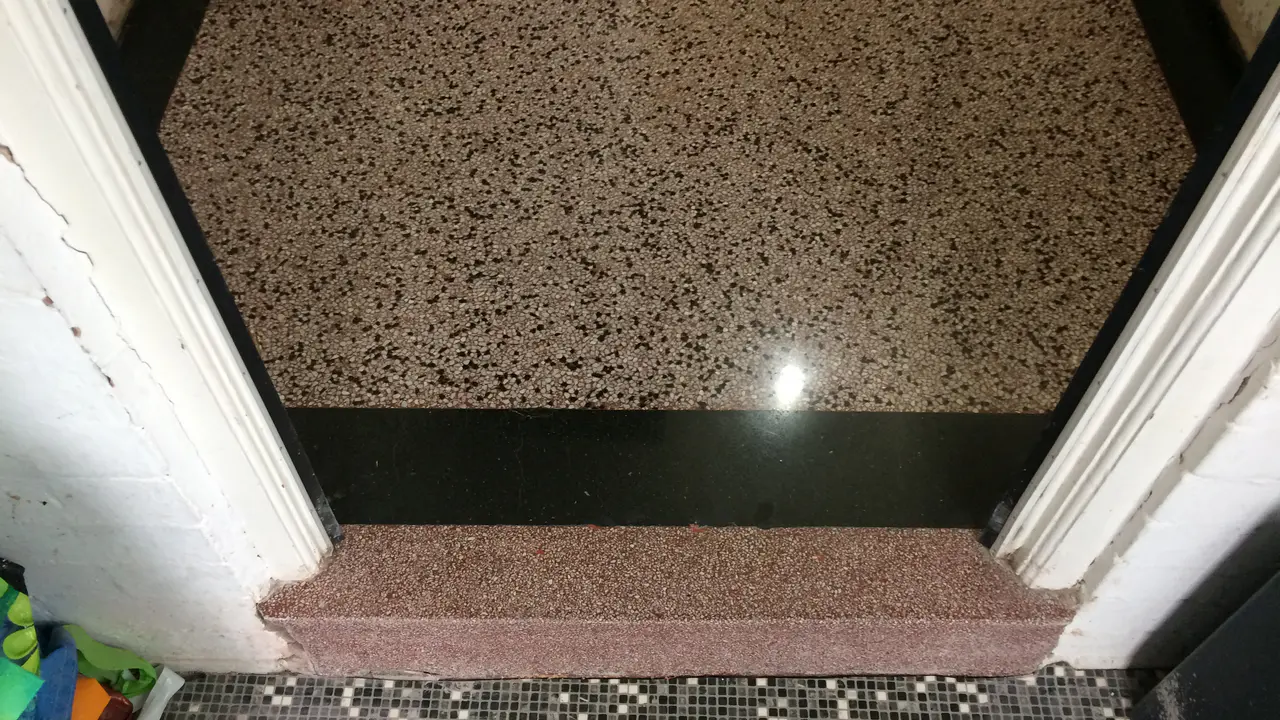
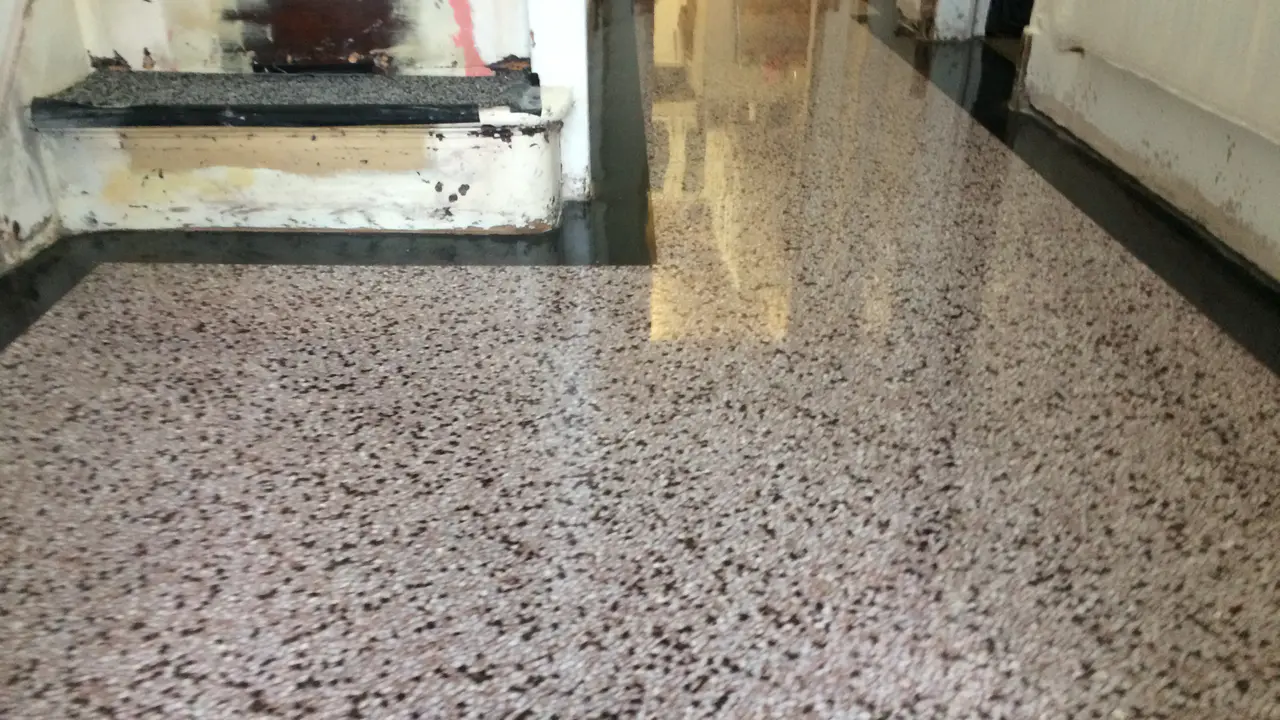
For the hallway’s final polishing stage, we used a polishing machine and terrazzo polishing compounds. The process produced the deep, lustrous shine the client had requested.
After polishing, we applied a high-quality impregnating sealer. This was protection for the polished terrazzo, not a film-forming coating used to create the gloss. An impregnating sealer can help reduce liquid absorption, but it does not make terrazzo scratch-proof or protect it from acidic spills.
The client was absolutely delighted with the finish and was happy to follow the recommended cleaning schedule.
Keeping the polished finish looking its best
We gave the client detailed cleaning instructions, including daily dry sweeping and damp mopping with the correct terrazzo cleaning solution. Removing outdoor footwear and keeping grit off the surface were central to protecting the high polish.
For homeowners considering a similar finish, the practical care priorities are:
- Remove dry grit regularly. Tracked-in particles abrade a polished surface underfoot.
- Use a compatible, low-residue, normally pH-neutral stone cleaner. Follow its dilution instructions rather than adding extra product.
- Avoid vinegar, acidic cleaners and descalers. These can damage cement-and-marble terrazzo, even when it has been sealed.
- Clean up spills promptly. Sealing provides useful protection, not immunity from staining or etching.
Pro Tip: We recommend these products for daily Terrazzo cleaning and interim resealing
Disclosure: As an Amazon Associate, Abbey Floor Care earns from qualifying purchases at no extra cost to you.


This Walsall hallway achieved the high-polished appearance the client wanted. The key choice was not simply whether terrazzo could shine again, but whether that finish suited the household’s willingness to maintain it. Here, the restoration and the agreed care routine went hand in hand.

David Allen — Abbey Floor Care
David Allen of Abbey Floor Care has more than 30 years of hands-on floor restoration experience. His professional experience includes terrazzo restoration, mechanical surface refinement, polishing and maintenance advice for homeowners.
Recent Posts:
We work throughout the country, just some of our work counties:
Copyright © 2026 Abbey Floor Care. Tile And Natural Stone Cleaning Consultants FAQ - Privacy Policy - Terms And Conditions
Abbey Floor Care is a participant in the Amazon Services LLC Associates Programme, an affiliate advertising programme designed to provide a means for websites to earn advertising fees by linking to Amazon.co.uk. As an Amazon Associate, we earn from qualifying purchases.